
Long before anyone in East Texas had a refrigerator or an air conditioner, families had a jar of homemade cane syrup on the table. Life was hard work, and that dark, thick syrup was one of the small comforts. People poured it over pancakes, brushed it on hams, and baked it into gingerbread.
Most of that way of life is gone now. In the small town of Henderson, though, a group of volunteers, a pair of mules, and one very old-fashioned syrup pan still keep it going every fall.
A Neighborhood Harvest
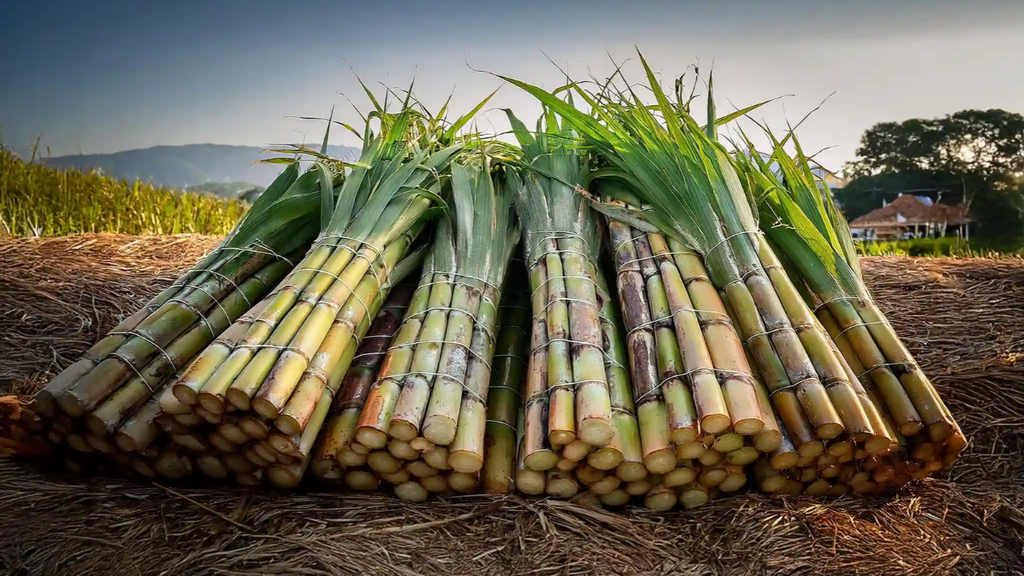
In the old days, farmers grew sugarcane in small patches, often about a quarter-acre, along creek beds and river bottoms. The plant looks like bamboo and can grow as tall as 15 feet. Harvest time was a social event. Neighbors came together to cut the cane and spend the day cooking the juice down into syrup.
Store-bought syrup eventually replaced the custom on most farms. Henderson decided not to let it disappear completely. Since 1988, the town has held its Heritage Syrup Festival every November on the five-acre grounds of the Depot Museum.
The 2015 festival was the 27th. Visitors saw syrup made the traditional way, plus demonstrations of other pioneer skills: broom making, wood carving, soap and candle making, blacksmithing, and basket weaving. About 40 folk artists sold their crafts on the museum grounds, next to food vendors and antique tractors. Downtown Henderson had its own events, with arts and crafts booths, live music, and an antique car show. The local 4-H club ran a shuttle between the two sites.
Don Reynolds helps set up the festival’s syrup shed and makes syrup in his own backyard. He says his grandfather raised cane and his mother cooked syrup as a girl, but the family had quit by the time he was born. For him, the festival is a way to get back something his family lost.
Mules, Steam, and a Maze of Boiling Syrup
Under the shade of big oak trees, two mules named Easter and Bunny take turns walking in circles to power the cane press, which people also call a mill. Volunteers feed cut stalks into it, and a foamy brown juice runs out into a bucket.
The real work happens in the syrup shed. Volunteers stand side by side in a thick cloud of sweet-smelling steam and move the juice slowly through a long, shallow pan. Their method is the “evaporative pan process,” a technique from the 1800s. The pan is about 12 feet long and 4 feet wide and sits on a brick firebox fueled with pinewood. Baffles inside the pan form a winding path, and the syrup makers push the boiling juice along it as it thickens.
They keep long ladles in hand to skim off the foam that rises to the top, much like skimming a pot of jam. They watch the heat and the clock, but mostly they go by feel and years of experience. Too much heat ruins the batch, and so does too little. Ten gallons of juice cooks down to about one gallon of syrup.
Mark Wheat, a Henderson resident and the festival’s syrup master, compares the work to candy making. After years on the job he has plenty of stories about things going wrong. One year, a cannon fired during a Civil War re-enactment scared a mule so badly that it nearly dragged the mill down the road. Another year, the syrup shed caught fire.
For Wheat, the festival feels like a homecoming. Each year the syrup crew gets back together and catches up on everything that has happened in each other’s lives.
How It All Started
Museum Director Vickie Armstrong says the festival began after two important donations: a 200-year-old copper syrup pan from the Richardson-Lowe Plantation in Rusk County, and a mule-powered cane mill from Herbert Leopard. In 2010 the Hale family of Henderson donated a newer pan to replace the old one.
According to Armstrong, the festival gave Henderson a tourism identity. She believes its main job is to keep history alive, because syrup making is a skill that is slowly dying out.
A Taste You Don’t Forget
The smell around the syrup shed is so strong that months later, one spoonful of the syrup can bring back the memory of that steam.
Cane syrup tastes like molasses with a hint of gingerbread. It has a sharp, slightly metallic edge and is much bolder than the thin syrups sold in grocery stores. It is as thick and sticky as honey and stronger in flavor than pure maple syrup. The Henderson crew usually throws out the first couple of batches so the copper pan’s “twang” doesn’t end up in the syrup.
Wheat admits it is an acquired taste. When older visitors try it, he says, their faces light up because it tastes like what their grandparents used to make. Younger visitors often wrinkle their noses because it doesn’t taste anything like the familiar bottled brands.
Visitors are welcome to taste the syrup made at the festival, but state health rules don’t allow it to be sold. Vendors at the event offer canned and jarred syrup instead, and some of it is processed at an enclosed mill in Louisiana that meets state requirements.
The Man Who Grows the Cane
Since 2012, the festival’s cane has come from Doug Ford of Hallsville. He grows heirloom ribbon cane on half an acre, which is plenty for hobby syrup making. His roughly 2,500 stalks a year produce about 30 gallons of syrup. In 2015, Ford also sold his own Texas-grown syrup, cooked in a stainless steel pan, a method that is licensed for food sales in Texas.
Ford says he enjoys growing unusual crops like ribbon cane and peanuts. He describes his cane patch as a jungle, with stalks 10 to 15 feet tall packed tightly together. A rainy spring followed by a hot summer in 2015 gave him his best crop ever.
He harvests in the fall and watches the weather closely. He wants the cane to grow as long as possible, but it has to come in before the first frost. Some plants come back on their own each year. For new plants, Ford buries pieces of stalk sideways in a furrow every spring and lets them take root.
He also sells whole stalks for chewing. Plenty of visitors leave the festival carrying a long green stalk over one shoulder and chewing on the sweet pulp like gum.
A Long History in Texas
Christopher Columbus brought sugarcane to the New World, which led to centuries of cane farming and trade in the West Indies and later in the American South. By the time Stephen F. Austin founded his colony in Mexican Texas, settlers there were already growing cane.
In the years that followed, sugar plantations around Brazoria used enslaved labor, and later prison labor, to make crystallized sugar from sugarcane and sorghum. Large-scale sugar production in Texas fell off in the late 1800s, after prison-labor laws changed and disease wiped out several years of crops.
Today, the only large commercial sugarcane operation in Texas is Rio Grande Valley Sugar Growers, Inc. The co-op says it produces more than 1.5 million tons of cane a year. Its mill in Santa Rosa makes sugar and blackstrap molasses, and the molasses is sold as cattle feed.
East Texas was different. The Handbook of Texas Online notes that sugarcane stayed popular there long after the rest of the state moved on, and local mills turned it into syrup. Farm-by-farm USDA surveys in 1870 and 1880 recorded cane syrup being made in almost every East Texas county.
The Rise and Fall of Lufkin’s Syrup Plant
In 1922, small farmers in 26 Piney Woods counties formed the Texas Farm Bureau Ribbon Cane Growers Association, and East Texas syrup got national attention. The group built a plant in Lufkin, where USDA food chemists helped produce two grades of syrup with consistent color, flavor, and thickness.
The plant helped Texas reach 2.1 million gallons of cane syrup in 1924, and it was still running in 1928. Lufkin city directories and old Texas Almanacs have no record of it by 1937.
Homemade cane syrup kept fading through the 1900s. National brands such as Mrs. Butterworth’s (1961) and Aunt Jemima syrup (1966) nearly finished it off. The USDA no longer even tracks cane syrup production.
The nonprofit Slow Food USA now lists traditional cane syrup on its “Ark of Taste,” a catalog of foods at risk of being forgotten. Alaskan birch syrup and the Four Corners gold bean are on the same list.
Passing It On
In Henderson, the Heritage Syrup Festival is doing its part to keep the tradition alive in the Piney Woods. Some volunteers bring their grandchildren so the kids can learn the old skills firsthand.
Wheat says it is the only way the craft will last. If young people don’t get involved now, nobody will be making syrup this way years from now. He enjoys showing a new generation how syrup was made before it came in a plastic bottle, since most of them have no idea.
As long as the mules keep walking and the pan keeps steaming, Henderson’s syrup makers plan to keep sharing that history with anyone who wants a taste.