
Ask anyone who grew up with tamales and they’ll tell you it isn’t really about the food. A tamale is a little bundle of corn husk wrapped around meat, cheese, or sometimes something sweet. What makes it special is the long afternoon spent making it, when the whole family sits around one table, talks, laughs, and works together until the pot is full.
East Texas families who still make them every holiday season say that time together is the real point.
Why Tamales Bring Everyone to the Table
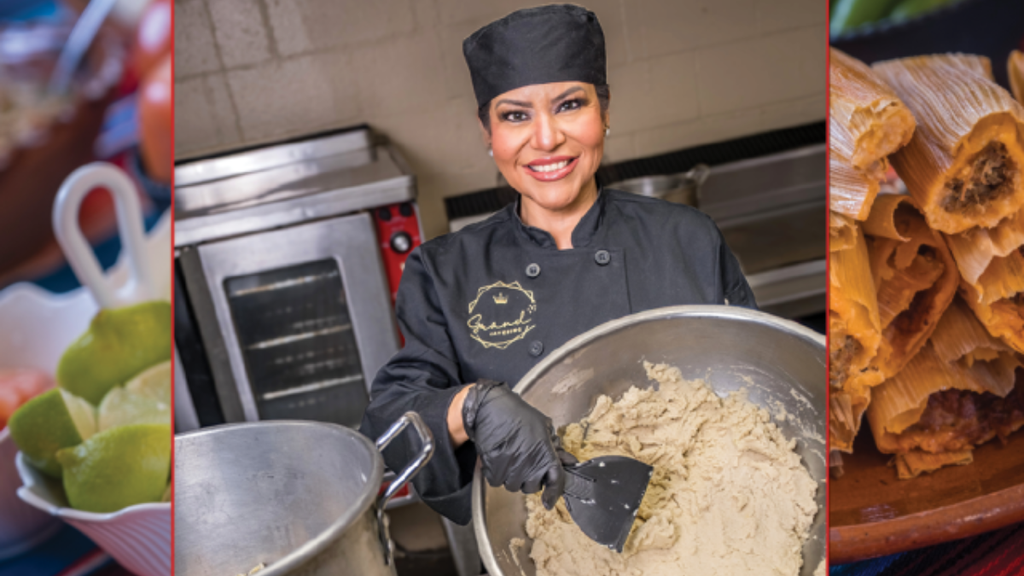
Sugey Garcia owns Grand Catering East Texas in Longview, and she has made tamales for as long as she can remember. She thinks the long process is exactly why families love it. Because the job takes so many hours, everyone has to sit down together to get it done, and while they work they talk, catch up, and make memories.
It really is a big job. You have to make the filling, prepare the masa, wash the corn husks, fill and fold every tamale, and then steam them for more than an hour. Depending on how many she’s making, Garcia says the whole thing can take around six hours.
To keep it moving, she gives everyone a job. Some people clean and soak the husks while others work on the filling or the dough.
Step by Step in Garcia’s Kitchen
Garcia always starts with the filling. Chicken in green salsa is a good example. She cooks the chicken first and shreds it once it’s done. For the salsa, she boils green tomatillos with jalapeños and garlic, then blends everything until it’s smooth.
Her biggest flavor tip is simple: make the masa with the broth from the cooked meat, not plain water. It gives the dough a much richer taste.
She mixes the masa by hand until it feels just right. Getting that texture takes a lot of practice, she says, and it’s harder than it looks.
Even then, the masa is only one step. Garcia says you’re always finishing one task and starting the next, so the day goes by in small pieces. It’s a lot of work, she admits, but it’s worth it in the end.
History Wrapped in Corn
Tamales were around long before they became a Christmas favorite in Mexican and Mexican American homes. They go back hundreds of years.
According to Mexico’s Secretariat of Culture, the word “tamal” comes from tamalli, a word in Nahuatl, the language of the Aztecs. Tamales were already part of Indigenous cooking in Mesoamerica before the Spanish arrived, and they appear in historical records from the 1500s. People made them from corn masa and filled them with whatever was common in their region or right for the occasion. Tamales were eaten on ordinary days and also at religious ceremonies.
They were also a practical food. Warriors and hunters on long journeys carried them because they were easy to pack and held up well. Tamales also had a place at festivals, rituals, and community celebrations.
Over the generations, every region and every family made the recipe a little more its own, with different fillings, spices, and wrappings.
Clara Rios, who spoke through Julio Magallanes, manager of Mr. Taco Jr. in Whitehouse, says tamales are a food for holidays and big family get-togethers. She pointed out that some people wrap them in corn husks and others use banana leaves, so they look very different from one community to the next.
The Smithsonian Center for Folklife and Cultural Heritage describes the tamalada, a tamale-making party, as a Christmas tradition where relatives share the work. Kids learn by watching and helping, and one day they become the ones who pass the recipes down.
The Magallanez family knows a lot about passing things down. Mr. Taco Jr. traces its roots to 1979, when Bonifacio and Rosa Magallanez opened the first Mr. Taco in Lockhart. That small Central Texas start grew into a family business that has served Tex-Mex food for several generations.
The Sweet Side of Tamales
Not every tamale is savory. Sweet tamales, called tamales de dulce, are a dessert version of the classic.
Garcia says her dessert tamales are a big hit. One is made with strawberries and mixed berries. Another has cream cheese, cinnamon, and raisins, and customers love it with a cup of coffee or hot chocolate. She calls it the perfect seasonal treat.
To make sweet tamales, cooks mix sugar into the corn masa and add things like fruit, cinnamon, or chocolate. Some, like the cinnamon-and-raisin kind, are even colored pink.
Garcia is now teaching her 11-year-old daughter how to make the dough and the filling herself. She’s confident her daughter will keep the tradition going.
A Christmas Tradition Worth Keeping
For Garcia, tamales belong to Christmas and to her family in Mexico. Her relatives are spread out in different places, so Christmas is when she travels back and everyone finally gets together.
Her family serves tamales next to the turkey at Thanksgiving too, but Christmas is the big gathering. One of her favorite childhood memories is making a pot of tamales on Christmas Eve so the family could eat them for breakfast the next morning. She still does the same thing when she and her daughter go to Mexico for the holidays.
At Mr. Taco Jr., the tradition goes back a few generations as well. Julio Magallanes, the owner’s son, says his grandmother has made tamales for decades. The restaurant gets more calls and bigger orders as the holidays get close, especially in November before Thanksgiving and in the weeks before Christmas.
For Magallanes, the season means more than food. What he enjoys most is spending time with family, especially relatives he doesn’t see very often.
Whether they’re served for Christmas breakfast, at a holiday dinner, or at a big family get-together, tamales give people a reason to gather, and a tradition worth passing on.