
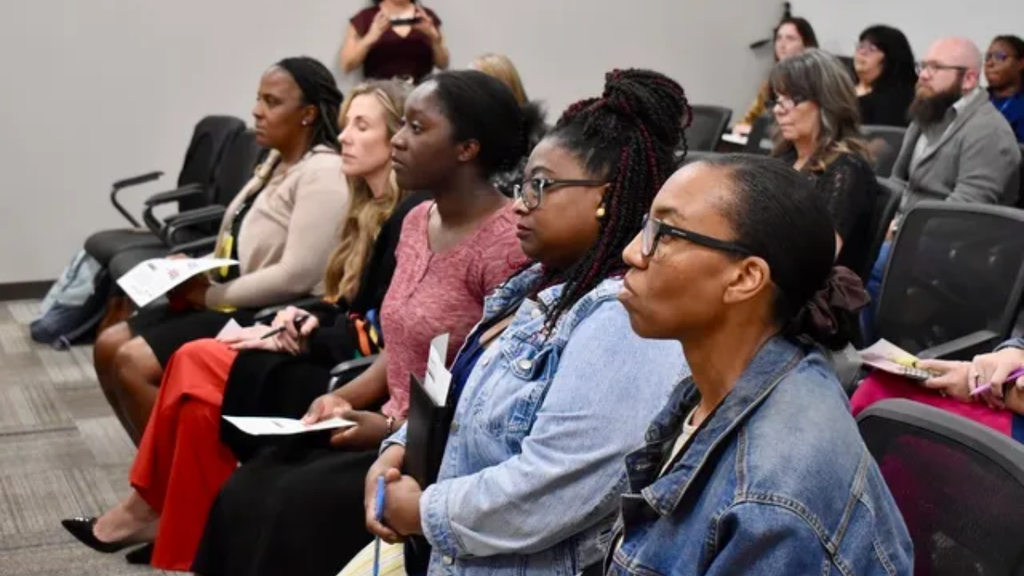
Finding affordable, good-quality childcare is a daily struggle for many East Texas families, and some families have no option nearby at all. On Monday, a group of childcare advocates came to Tyler to hear from the people who deal with that problem every day.
Children at Risk, a nonprofit that researches and advocates for Texas children, wrapped up its Fall 2026 Texas Tour with a stop in Tyler. The discussion covered childcare access, affordability and quality, and what the group plans to push for when the 90th Texas Legislature meets in 2027.
The Final Stop on a 12-City Tour
Early childhood leaders and community partners met at Workforce Solutions of East Texas from 3:30 to 5 p.m. to share what they’re seeing locally and work through ideas for strengthening childcare in the region.
Tyler was the last of 12 cities on the tour. At each stop, Children at Risk shared its latest data on early childcare and childcare deserts, showing where communities made progress over the past year and where they’re still falling behind.
Lyn Lucas, associate director of education at Children at Risk, said looking at data from offices in Houston, Austin or Fort Worth only tells part of the story. To really understand what’s going on, she said, you have to talk with the providers and families who live it every day.
Why East Texas Matters
Lucas said rural communities have a harder time getting childcare because they have fewer providers and fewer resources. A few years ago, Children at Risk noticed East Texas was missing from its statewide tour and saw that as a big gap. Adding the region has been important, she said, and local partners have played a major role.
The Numbers Behind the Problem
The East Texas Local Workforce Development Board area has 37,706 children under age 6. Of those, 23,030 qualify for childcare assistance or scholarships.
Christina Alton, assistant director for early childhood education at Children at Risk, said the Texas Workforce Commission can serve only 6,125 of those children. That gap is a big reason childcare deserts exist.
A childcare desert is a zip code with more than 30 young children where demand for childcare is at least three times the local supply of licensed providers. Half of East Texas’ childcare deserts have stayed that way for three years in a row, which makes them “chronic” deserts.
Alton also pointed out that one in 10 children in East Texas both lives in a childcare desert and comes from a low-income family.
Three Kinds of Childcare Deserts
Alton explained that Children at Risk tracks three types of deserts:
- Overall childcare deserts: areas where demand is three times the supply
- Subsidy deserts: areas short on seats for families who qualify for federally funded childcare
- Quality deserts: areas lacking programs rated through the Texas Rising Star system
There is some good news. The number of subsidy seats in East Texas grew by 48%, and certified locations went from 108 to 160.
Long Drives and Hard Choices for Rural Parents
Lucas and Stormie Tolar, a family and community engagement specialist with BakerRipley – Workforce Initiative, a local partner of Children at Risk, said many parents still have to leave their own towns to find childcare.
Tolar said small towns in rural counties, such as Emory or Gilmer, often don’t have childcare centers at all. Some families end up relying on a listed family home or a relative. A parent who lives in Diana and works in their own small town, for example, doesn’t want to drive to Longview for childcare and then drive all the way back.
Those workarounds come with trade-offs, Tolar said. A relative may care for and even teach a child, but that’s not the same as a classroom with a set curriculum. Kids can miss out on early learning, time with other children, and skills like fine motor development. She stressed that a child’s first four years are the most important.
Childcare Affects Jobs, Families and Businesses
Lucas said long waitlists and a lack of affordable options push some parents to turn down job opportunities, and some even decide not to have more children.
She said businesses need their employees to have reliable, high-quality childcare. Childcare workers, meanwhile, need to earn enough to stay in the field. That’s why she believes childcare needs long-term investment, not a one-time fix.
According to Lucas, low pay and a lack of long-term investment are the main reasons childcare deserts exist in Texas.
What Long-Term Investment Looks Like
Lucas said fixing the system means tackling several pieces at once:
- making childcare affordable for families
- making sure businesses can count on childcare for their workers
- paying childcare professionals competitively
- expanding the number of available spots
- addressing shortages in rural communities
She admitted that doing it well is expensive, but said it’s a must for children, families and communities.
Looking Ahead to the 2027 Legislature
A big part of Monday’s discussion was about pushing for more childcare funding in the 2027 legislative session.
Last session, providers asked lawmakers for $100 million to serve 10,000 more children. Lucas said it didn’t play out that way. The funding ended up keeping 10,000 children from losing their childcare services, because of inflation and because more children are being served through Texas Rising Star.
This time, Lucas said, the group plans to ask for an even bigger investment. With new lawmakers coming in, she hopes someone will author a bill and champion the issue.
She said the recent election hasn’t changed Children at Risk’s agenda, but it has opened new chances to talk about it.
Turning Local Stories Into Policy
Lucas said these community meetings feed into Children at Risk’s Local Workforce Development Board report. They also give the group real local examples to bring to Austin.
When advocates meet with lawmakers, she said, they can explain exactly how childcare issues affect each representative’s district. Sometimes local residents travel to the Capitol to testify at hearings and share how policy affects their lives.
Children at Risk is also working toward a statewide committee and hopes to get local leaders involved. With a new governor and new members joining the House, Lucas expects changes in which committees form and who sits on them. The group plans to build relationships with the new officials at the Capitol and share information to help them make informed decisions.
Other Topics on the Table
Attendees also talked about statewide policy developments, including:
- the Texas Sunset Advisory Commission review process
- the Governor’s Task Force on Early Childhood Education and Care
- priorities shaped by community input
A Two-Way Conversation
Lucas said she hoped people left the meeting knowing something new and also shared something new with the group. She encouraged attendees to take what they learned to their local leaders, whether that’s a city council member or someone on their local workforce board, since those decisions affect families “right in their own backyard.”
The Bottom Line
Children at Risk ended its 12-city Texas Tour in Tyler with a clear message. East Texas has made real progress, including a 48% jump in subsidy seats, but thousands of young children still don’t have access to affordable, quality care. Advocates are now preparing to bring those local stories to Austin and push for a larger, long-term investment in childcare during the 2027 legislative session.